
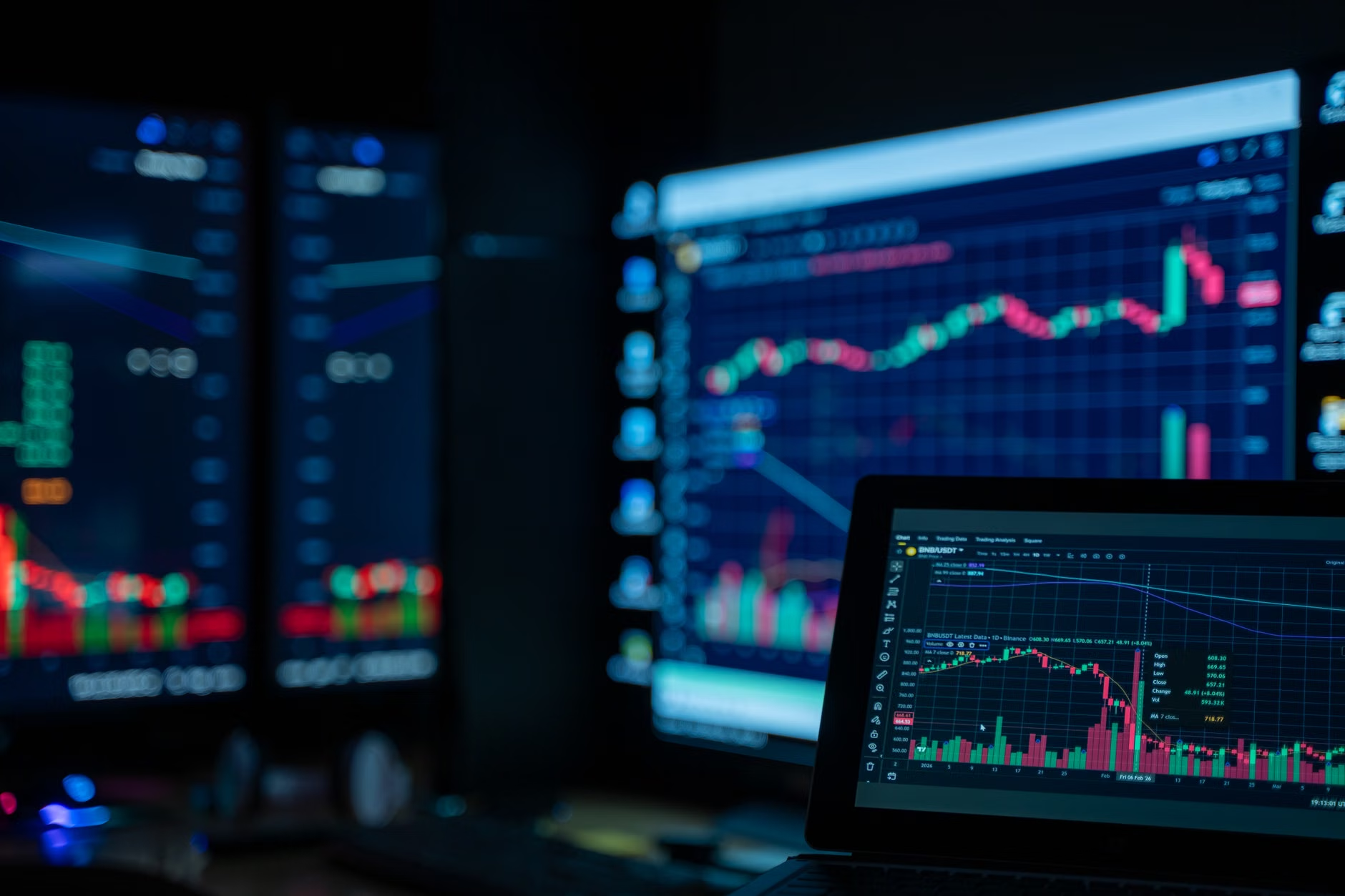
Geopolitical events do not influence stocks simply because headlines feel dramatic. Markets react when an event changes expected corporate earnings, disrupts trade or supply chains, moves energy and commodity prices, tightens financial conditions, or makes investors demand a bigger risk premium for owning equities. The IMF, ECB, Federal Reserve, and World Bank all describe versions of the same mechanism: geopolitical shocks travel through both the real economy and the financial system, and those spillovers can reach stock markets quickly. (imf.org)
Table of Contents
- TL;DR
- The mechanism is less mysterious than the headline cycle
- Why the first move is usually volatility, not careful valuation work
- Use the four-channel test before reacting to a geopolitical shock
- Different geopolitical shocks travel through markets in different ways
- Why emerging markets often absorb the larger shock
- A hypothetical example: how a regional conflict becomes a global equity story
- Common mistakes that turn headlines into bad investment decisions
- A practical monitoring routine for readers who follow global markets
- What long-term investors should actually take from this
- Conclusion
- FAQ
- References
TL;DR
- Stocks usually fall when a geopolitical event threatens growth, raises costs, or increases uncertainty enough that investors demand lower valuations. (imf.org)
- The strongest market reactions often come through four channels: direct earnings exposure, commodity and inflation pressure, capital-flow and liquidity stress, and government or central-bank response. This four-channel test is an editorial decision tool in this article, not a standard industry model. (federalreserve.gov)
- Emerging markets often absorb larger damage because they can be more exposed to external financing conditions, import costs, weaker buffers, and investor outflows when global risk sentiment worsens. (imf.org)
- Not every geopolitical shock creates a lasting bear market. BIS and ECB material show that markets sometimes recover quickly when investors believe the event is contained, earnings remain firm, and policy support is still credible. (bis.org)
The mechanism is less mysterious than the headline cycle
At a basic level, a stock price is a claim on future cash flows discounted by the return investors require. Geopolitical events matter when they worsen one side of that equation, or both. A war, sanctions package, export control, tariff escalation, or cyber incident can reduce sales, raise input costs, delay shipping, disrupt investment, or make central banks less likely to cut rates if inflation risk rises. The ECB notes that geopolitical risk can hurt GDP growth, trade, investment, consumption, savings, capital flows, stock prices, exchange rates, credit spreads, and rates at the same time. (ecb.europa.eu)
That is why the same event can hit markets through several layers. First comes the immediate repricing of risk. Then analysts begin revising earnings assumptions. After that, bond markets may reprice inflation and policy rates, currencies may move, and financing conditions may tighten for weaker borrowers. The IMF also finds cross-border spillovers: when a main trading partner is drawn into an international military conflict, stock valuations in connected economies decline on average. (imf.org)
A frightening headline is not the same thing as a durable market thesis. This article explains market mechanics and risk signals, not personalized investment advice.
Why the first move is usually volatility, not careful valuation work
Markets usually react to geopolitical news before investors have reliable estimates of the economic damage. That first move is driven by uncertainty. The IMF says geopolitical shocks tend to raise macroeconomic uncertainty for several months, while the ECB has documented higher financial stress, wider spreads, weaker fund returns, and flows toward safer assets after such shocks. In euro-area evidence, corporate bond funds experienced outflows while sovereign bond funds saw inflows, a classic flight-to-safety pattern. (imf.org)
But volatility is not the same thing as lasting impairment. BIS reporting over 2025 and 2026 shows several periods in which markets absorbed tariff uncertainty or geopolitical flare-ups with only short-lived stress because corporate fundamentals stayed solid and investors still expected policy support. That is an important distinction: headlines can cause a selloff even when the eventual hit to profits is limited, and markets can stay buoyant longer than geopolitical logic alone would suggest. (bis.org)
Use the four-channel test before reacting to a geopolitical shock
A useful way to read geopolitical market moves is to run a four-channel test. This is an original editorial framework for this article, not an official model. The point is to force a better question than “Will stocks go down?” The better question is: Which transmission channel is strongest, and how long can it last?
- Direct earnings exposure. Which sectors, countries, and companies actually do business in the affected region or rely on its inputs, routes, or customers? Cross-border trade and revenue links are often the first place to look. (imf.org)
- Commodity and inflation pressure. Does the event threaten oil, gas, food, freight, insurance, or critical materials? If it does, the stock story may become a bond-market and rate story very quickly. (thedocs.worldbank.org)
- Capital-flow and liquidity stress. Are foreign investors likely to pull back? Are dollar funding pressures relevant? Are nonbank investors and ETFs likely to amplify the move? These questions matter especially for emerging markets. (federalreserve.gov)
- Policy response and containment. A market can stabilize if governments, central banks, or commodity producers contain the economic damage. It can deteriorate if sanctions broaden, supply chains stay impaired, or inflation expectations keep rising. (bis.org)
Different geopolitical shocks travel through markets in different ways
| Event type | What usually changes first | Market areas that often react quickly | What to watch before assuming a lasting trend |
|---|---|---|---|
| Military conflict near a major energy or shipping route | Energy prices, freight costs, insurance costs, and inflation expectations often move first. (thedocs.worldbank.org) | Airlines, transport, import-heavy manufacturers, sovereign bonds, and commodity-importing emerging markets often react quickly. (ecb.europa.eu) | Whether supply loss is brief or persistent, and whether central banks reprice the rate path. (bis.org) |
| Sanctions or export controls | Revenue expectations, supply-chain continuity, and access to funding or components may deteriorate before headline GDP data does. (imf.org) | Industrials, semiconductors, transport, and firms with concentrated geographic exposure can be sensitive. ECB analysis found transport, aircraft, steel, and electronics among the more exposed industries in its euro-area sample. (ecb.europa.eu) | Whether firms can reroute trade, redesign sourcing, or pass through higher costs without major margin damage. (thedocs.worldbank.org) |
| Tariff escalation or broader trade fragmentation | Growth expectations and margin assumptions usually weaken through higher costs, lower trade volumes, and slower investment. (thedocs.worldbank.org) | Exporters, cyclicals, and markets dependent on open trade often move before domestic sectors do. (ecb.europa.eu) | Whether the shock is negotiating theater or a durable shift in policy architecture. BIS has shown that markets sometimes shrug off trade conflict when earnings and policy support stay strong. (bis.org) |
| Cyberattack affecting financial or critical infrastructure | Operational continuity, market functioning, and confidence can become more important than earnings models in the first hours or days. (federalreserve.gov) | Financials, payment systems, exchanges, utilities, and highly connected service providers may react first. (federalreserve.gov) | Whether the incident is contained quickly or turns into a broader liquidity or confidence problem. (federalreserve.gov) |
The most important distinction in that table is whether the event is mainly a confidence shock or a supply shock. A confidence shock may cause a quick risk-off move and then fade. A supply shock, especially one tied to energy, shipping, or trade restrictions, can last longer because it feeds into inflation, rates, earnings, and currencies at the same time. The IMF’s April 2026 report explicitly warns that higher energy prices and renewed inflation pressure can push both equities and bonds in the wrong direction together. (imf.org)
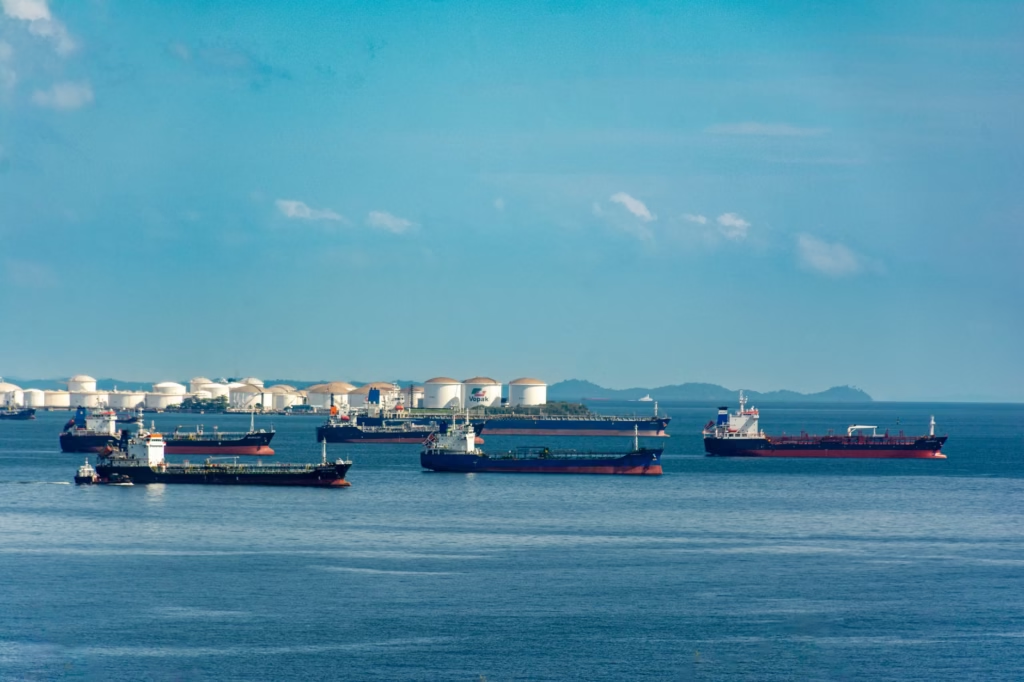
Why emerging markets often absorb the larger shock
The IMF’s April 2025 work gives a useful baseline. Across countries, major geopolitical risk events were associated with an average monthly stock-market drop of about 1 percentage point, but the average effect was much larger in emerging market economies, at around 2.5 percentage points. For international military conflicts, the average monthly drop in emerging market stock returns was about 5 percentage points. The same IMF analysis also reported larger increases in sovereign risk premiums for emerging economies than for advanced ones. (imf.org)
Why the bigger hit? Usually because several vulnerabilities stack up at once: heavier dependence on imported energy or food, less room for fiscal support, thinner market liquidity, greater sensitivity to dollar funding conditions, and a more abrupt reaction from global portfolio investors. The ECB and IMF both note that economies with higher public debt, weaker reserves, weaker institutions, or greater openness can be more vulnerable to amplification effects after geopolitical shocks. (imf.org)
A hypothetical example: how a regional conflict becomes a global equity story
Consider a hypothetical conflict that threatens a major oil and shipping corridor. In the first stage, traders reprice energy, freight, and insurance risk. Airlines, logistics firms, and manufacturers that rely on time-sensitive imported inputs may sell off first, while commodity producers may hold up better. Bond markets might initially show a safety bid, but if the shock keeps pushing inflation expectations higher, yields can rise instead of fall. That mix is not merely theoretical: recent IMF and BIS material describes equity weakness, higher energy prices, and upward revisions to inflation and policy-rate expectations during conflict-driven stress. (thedocs.worldbank.org)
In the second stage, the four-channel test helps separate noise from substance. If the disruption looks short, markets may recover once shipping reroutes and policy support remains credible. If the disruption broadens, then earnings downgrades spread, central banks become more cautious about easing, and emerging-market importers can face currency and capital-flow pressure. The stock move then stops being a single headline reaction and becomes a macro-financial repricing. (federalreserve.gov)
Common mistakes that turn headlines into bad investment decisions
- Treating every geopolitical event as equal. IMF findings suggest international military conflicts tend to hit equities harder than other types of geopolitical events, and spillovers depend heavily on trade links. (imf.org)
- Focusing only on the country in the news. Markets often move more through indirect exposure such as suppliers, energy dependence, shipping routes, funding links, and major trading partners. (imf.org)
- Assuming bonds will always hedge stocks. The IMF’s April 2026 report warns that repeated supply shocks can weaken the stock-bond hedge and create simultaneous selloffs. (imf.org)
- Ignoring policy response. BIS reporting shows that expected monetary easing or fiscal cushioning can mute the market damage from trade or political shocks for a time. (bis.org)
- Confusing volatility with value. A sharp selloff may reflect uncertainty, deleveraging, or fund outflows before anyone has a solid estimate of long-run earnings damage. (ecb.europa.eu)
A practical monitoring routine for readers who follow global markets
- Start with the event map. Is this primarily a war risk, trade-policy shift, sanctions event, or infrastructure disruption? Different shocks imply different market channels.
- Check cross-asset confirmation. Look beyond stocks to oil, gas, freight-sensitive sectors, sovereign yields, credit spreads, and major currencies. Broad confirmation usually signals a deeper shock than an isolated equity drop. (thedocs.worldbank.org)
- Separate immediate exposure from narrative exposure. Which companies or markets are directly affected, and which are merely trading on sentiment? The second group often reverses faster.
- Watch rate expectations. If the event is inflationary, equity weakness can persist because valuation pressure and earnings pressure arrive together. (bis.org)
- Revisit balance-sheet vulnerability. For countries or sectors with high debt, short-term funding needs, or heavy external financing dependence, the same shock can be much more damaging. (ecb.europa.eu)
- Update the view as policy changes. Sanctions scope, diplomatic de-escalation, commodity supply responses, and central-bank communication can all materially change the market path within days or weeks. (bis.org)
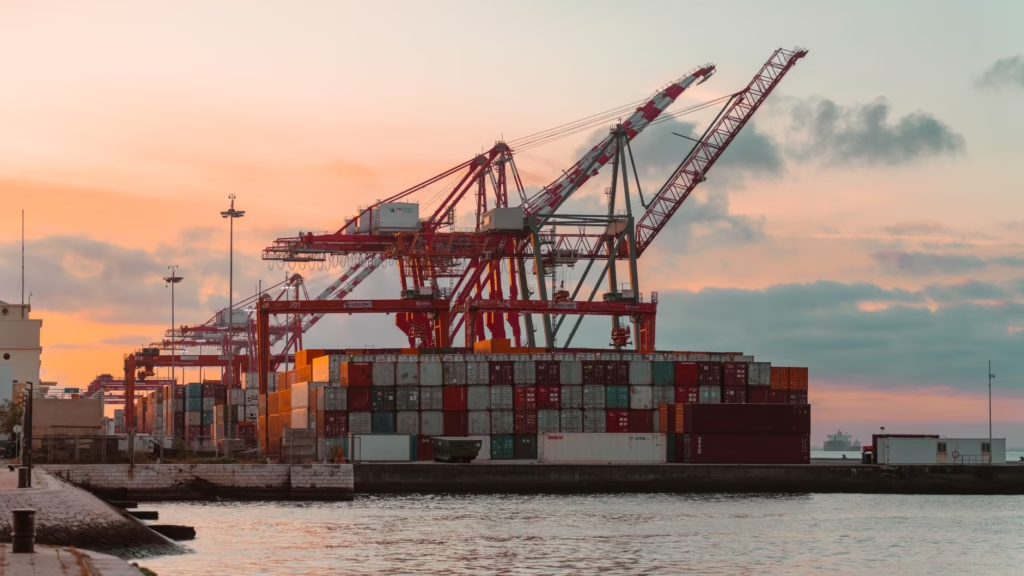
What long-term investors should actually take from this
The practical takeaway is not that every geopolitical shock deserves a portfolio overhaul. It is that diversification has to be real, not superficial. A portfolio can look diversified by geography while still being concentrated in the same inflation-sensitive sectors, the same global supply chain, or the same risk-on investor base. IMF and ECB work both suggest that cross-border portfolio flows, nonbank positioning, and economic openness can amplify shocks in ways a simple country-allocation view misses. (imf.org)
The second takeaway is that structural fragmentation matters as much as the headline shock. Geopolitical distance can change where investment capital goes, not just how markets trade for a few days. IMF research on financial fragmentation finds that investment funds allocate smaller portfolio shares to countries that are geopolitically more distant, while geopolitical shocks can also reduce lending and cross-border exposure. For readers following global equities, that means the long-term winners and losers may be shaped by capital reallocation as much as by the initial news event. (imf.org)
Conclusion
Geopolitical events influence global stock markets through a small set of repeatable channels: earnings exposure, commodity and inflation pressure, liquidity and capital flows, and policy response. The headline may be new, but the market logic usually is not. The most useful habit is to stop asking whether an event is scary and start asking which transmission channel is strongest, whether the shock is temporary or structural, and which markets are most vulnerable if the first move turns into a broader repricing. That shift in perspective will not eliminate uncertainty, but it does make it much easier to read what global markets are actually doing.
FAQ
Do geopolitical events always cause global stock markets to fall?
No. They often cause an initial risk-off move, but not every event produces a lasting decline. BIS and ECB material shows that markets can recover quickly when investors judge the event to be contained, corporate earnings remain solid, and policy support stays credible. (bis.org)
Which sectors are usually most sensitive to geopolitical shocks?
Sensitivity depends on the event, but transport, airlines, industrial supply chains, energy-intensive manufacturers, and externally financed emerging-market assets are often vulnerable when the shock affects trade, fuel, or shipping. ECB analysis of euro-area holdings identified transport, aircraft, steel, and electronics among the more exposed industries in its sample. (ecb.europa.eu)
Why do commodity prices matter so much for stocks during geopolitical crises?
Because commodity shocks can squeeze profits and raise inflation at the same time. When oil, gas, food, or freight costs rise, margins weaken for many companies, while bond markets may also price fewer rate cuts or even tighter policy. That combination can pressure both equities and bonds. (thedocs.worldbank.org)
Can central banks offset geopolitical market stress?
Sometimes, but only partly. If the shock is mainly a confidence event, policy support can calm markets. If the shock is inflationary because it disrupts energy or supply chains, central banks have less room to cushion equities without risking inflation expectations. (bis.org)
How should individual investors use this information without trading every headline?
Use it as a monitoring and risk-diagnosis tool, not a headline-trading prompt. Focus on exposure, duration, balance-sheet vulnerability, and policy response. If those do not materially change, a scary headline alone may not justify a major portfolio decision.
References
- IMF blog: How Rising Geopolitical Risks Weigh on Asset Prices (April 14, 2025) – https://www.imf.org/en/blogs/articles/2025/04/14/how-rising-geopolitical-risks-weigh-on-asset-prices
- IMF: Global Financial Stability Report, April 2025 – https://www.imf.org/en/publications/gfsr/issues/2025/04/22/global-financial-stability-report-april-2025?cid=ca-com-compd-pubs_belt
- IMF: Global Financial Stability Report, April 2026 – https://www.imf.org/en/publications/gfsr/issues/2026/04/14/global-financial-stability-report-april-2026
- ECB and ESRB: Financial stability risks from geoeconomic fragmentation press release (January 22, 2026) – https://www.ecb.europa.eu/press/pr/date/2026/html/ecb.pr260122~0b138afc39.sl.html
- ECB Financial Stability Review special feature: Turbulent times: geopolitical risk and its impact on euro area financial – https://www.ecb.europa.eu/press/financial-stability-publications/fsr/special/html/ecb.fsrart202405_01~4e4e30f01f.en.html
- Federal Reserve: Financial Stability Report – Near-Term Risks to the Financial System (May 2026) – https://www.federalreserve.gov/publications/2026-may-financial-stability-report-near-term-risks.htm
- World Bank: Global Economic Prospects, June 2025 – https://thedocs.worldbank.org/en/doc/8bf0b62ec6bcb886d97295ad930059e9-0050012025/original/GEP-June-2025.pdf
- World Bank: Commodity Markets Outlook, April 2025 – https://thedocs.worldbank.org/en/doc/1b388949805c9a0ae3736bdacb32ea94-0050012025/original/CMO-April-2025.pdf
- BIS Quarterly Review article: Markets shrug off trade conflicts (September 2025) – https://www.bis.org/publ/qtrpdf/r_qt2509a.htm
- BIS Quarterly Review article: Markets recalibrate amid shifting currents (March 2026) – https://www.bis.org/publ/qtrpdf/r_qt2603a.htm
- IMF Working Paper: A Gravity Model of Geopolitics and Financial Fragmentation (2024) – https://www.imf.org/en/publications/wp/issues/2024/09/13/a-gravity-model-of-geopolitics-and-finmentation-551343
